The Best Things To Do in Sokcho, South Korea

When people think of South Korea, they usually picture the bustling city of Seoul or the popular beaches of Busan. But for me, Sokcho holds a special place in my heart.
Located on the northeast coast of Gangwon-do province, Sokcho is the perfect marriage of mountains and sea.
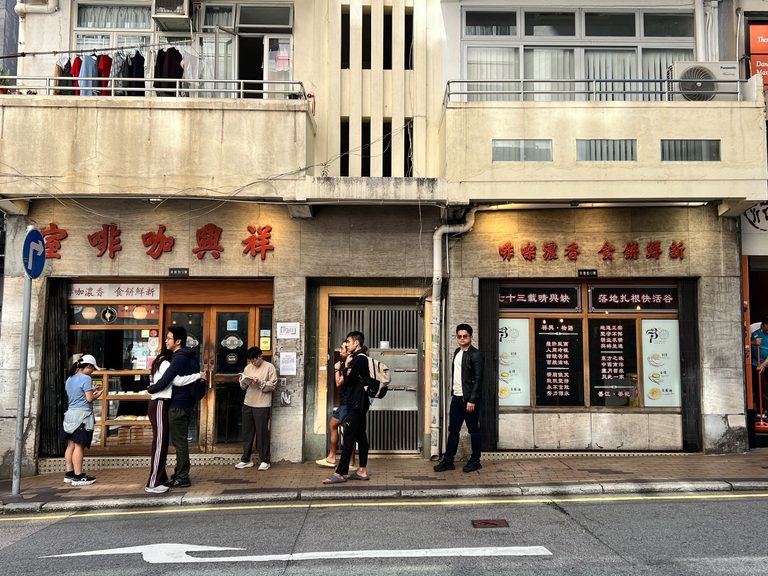
It is home to Korea’s famous Seoraksan National Park and offers a laid-back vibe you just can’t find in the capital. It gave me the same nostalgic feeling I had when visiting the fishing town of Tai O in Hong Kong.
During my 14-day trip to South Korea, I carved two days for Sokcho. My goal? To hike Ulsanbawi Peak and spend the rest of my time eating fresh seafood and exploring this vibrant port city’s refugee history.
Here are the best things to do in Sokcho based on my two-day stay that you wouldn’t want to miss!
Disclosure: This post contains affiliate links. If you book through them, I may earn a small commission at no extra cost to you. I hope you find the information useful and will continue to support me in providing quality articles and travel guides.
1. Hike in Seoraksan National Park
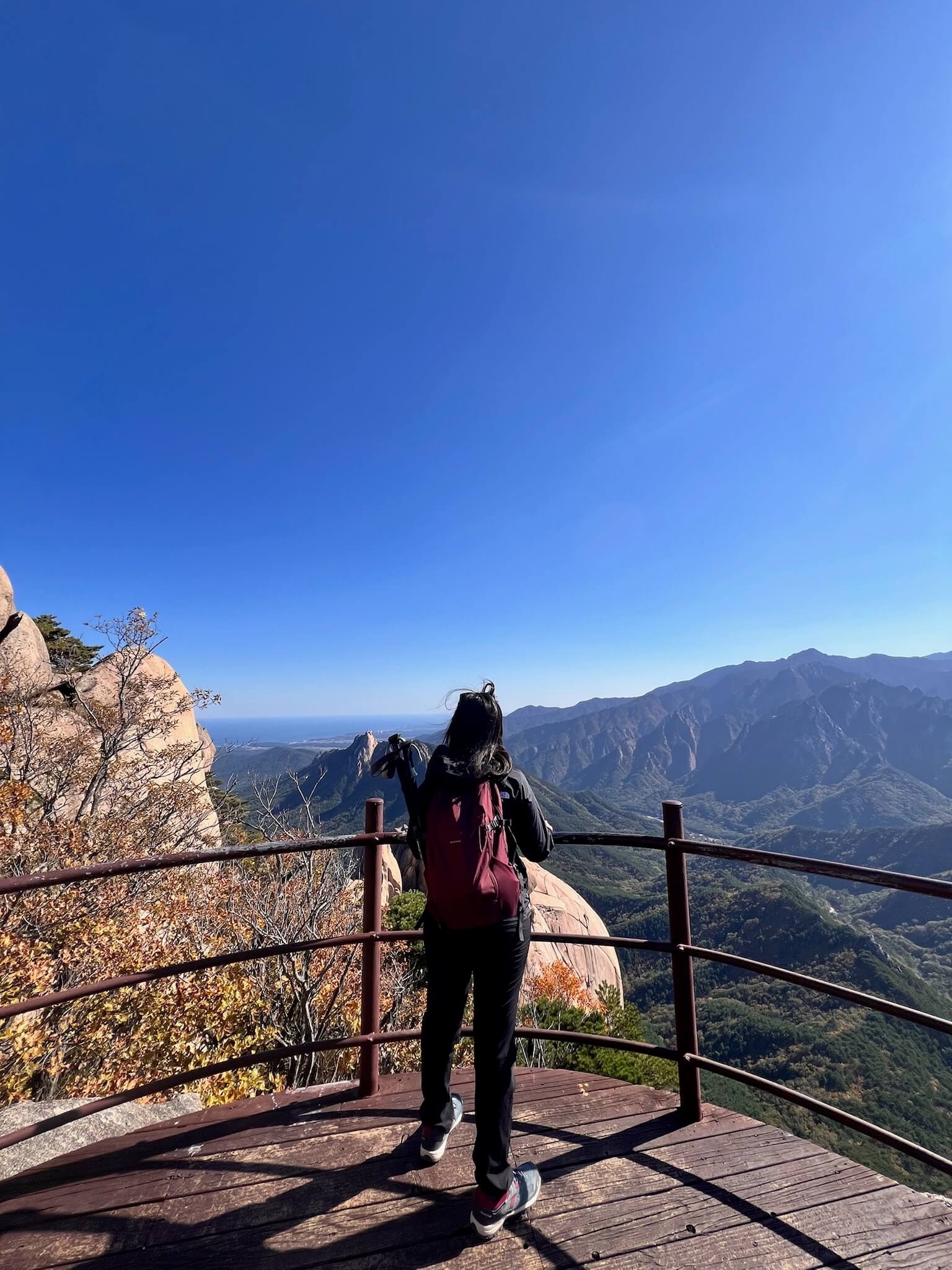
You simply cannot visit Sokcho without seeing Seoraksan. In my experience, it is one of the most breathtaking national parks in Korea, featuring towering granite peaks, magical forests, and dramatic landscapes.
I visited during autumn, and the fall foliage blew me away. The mountains turned into a sweeping sea of fiery red and orange.
Here are some of the things you can do at the national park:
- For the Adventurous: Challenge yourself to hike up to Ulsanbawi Rock (this is what I did, and it is quite the workout!).
- For a Relaxing Visit: Take a stroll along the valley trails. The park is beautiful even from the ground level.
- The Easy Way Up : If you want the views without the sweat, take the Seoraksan Cable Car (around 15,000 KRW round trip). It takes you near the peak of Gwongeumseong Fortress for incredible panoramic sights.
Don’t want to DIY the hike? See official Seoraksan Cable Car tickets and hours to skip the climb and still get the summit views.
📌 Read my hike: Hiking Ulsanbawi Rock in Seoraksan National Park
2. Visit the Sokcho Tourist & Fishery Market (Jungang Market)
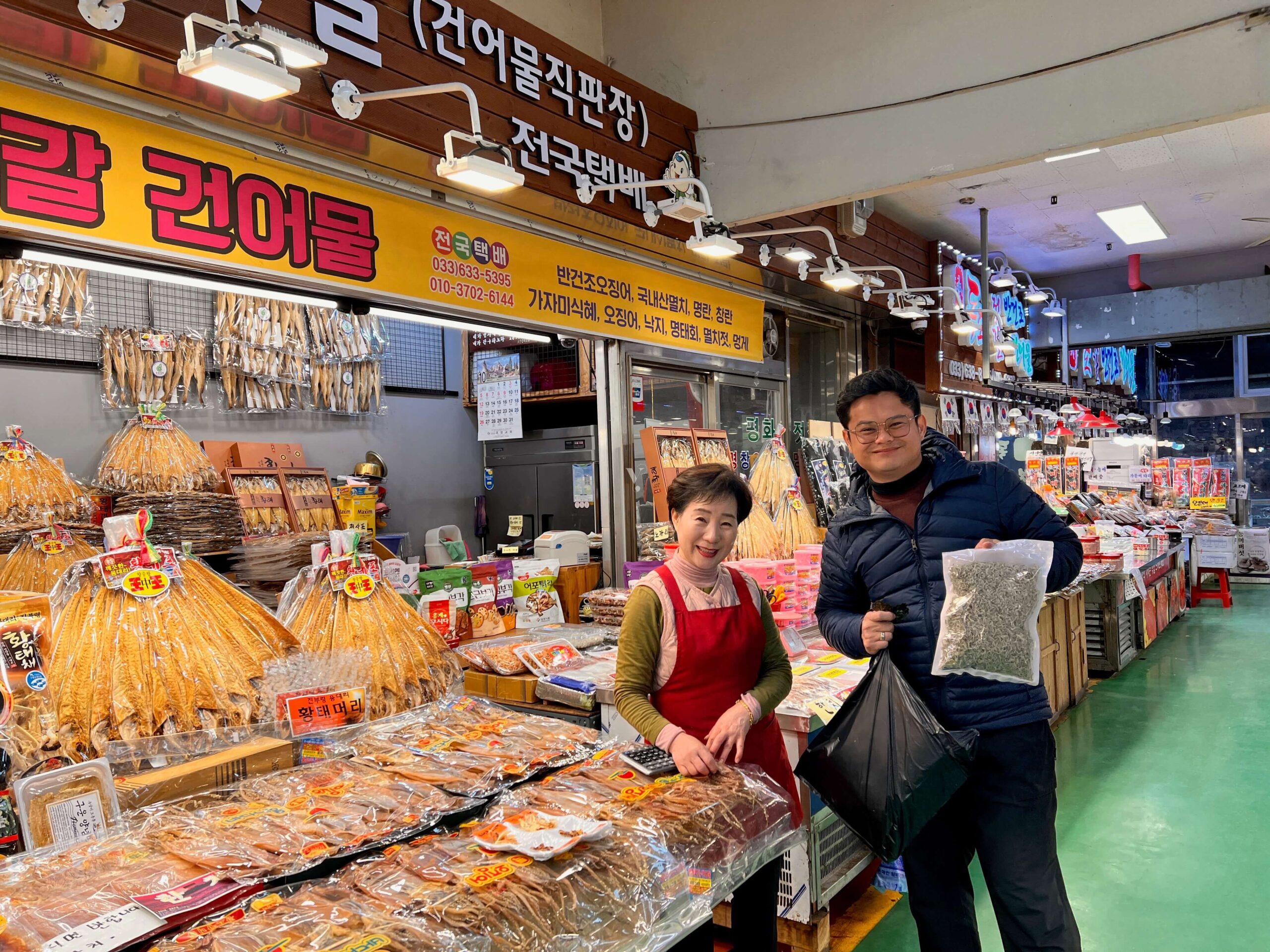
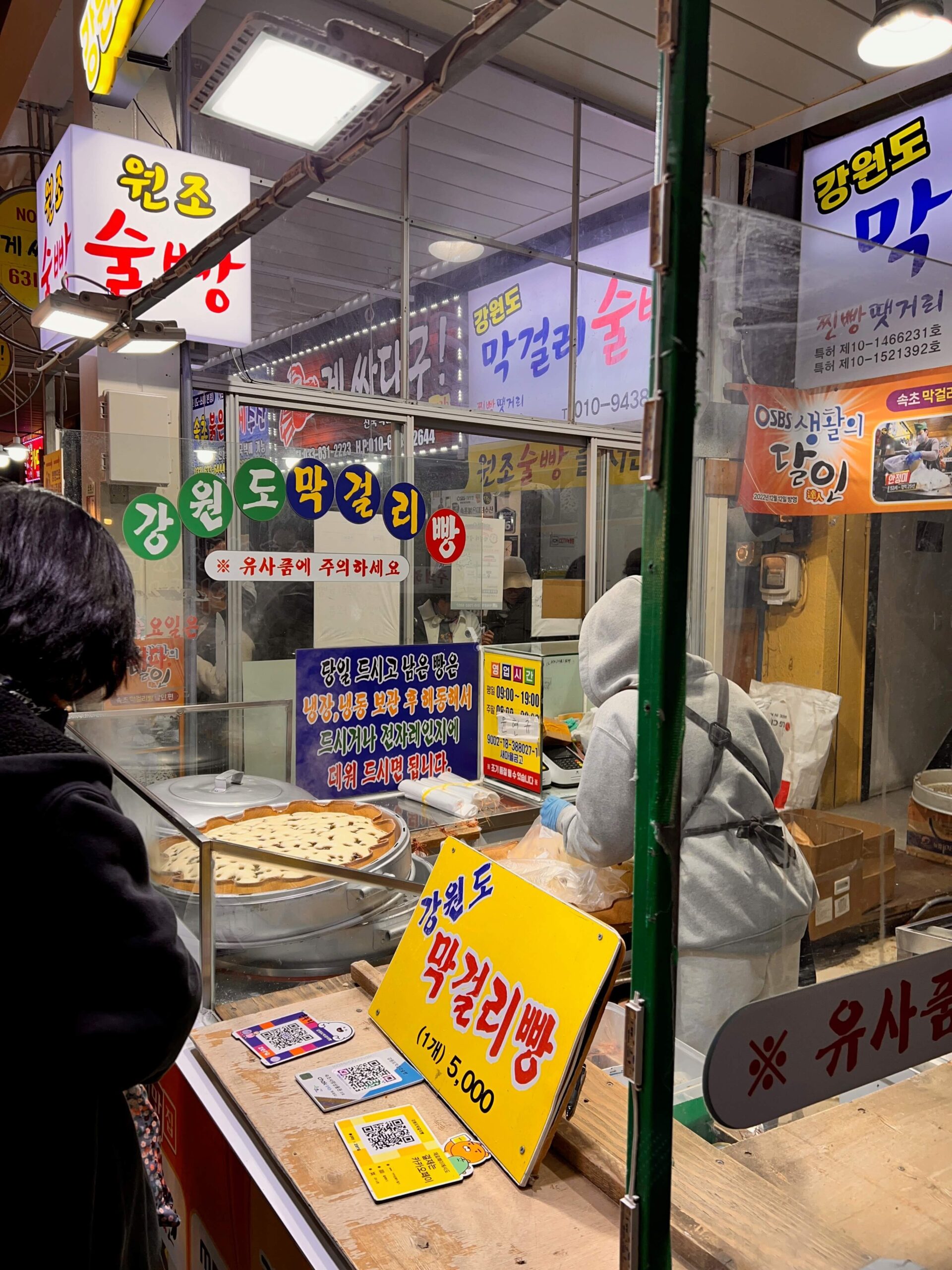
During your visit to Sokcho, this Sokcho Tourist and Fishery Market is a must! It may look like a wet market with fresh fish and seafood, but the whole building is actually big.
You can find plenty of things in different alleys, from clothing, food, snacks, utensils, and also dried seafood products! My husband and I tried a few, and we bought some to bring back home.
The market is bustling, loud, and smells like the ocean in the best way possible. But don’t let it bother you.
Once you reach the food alley, you’ll be greeted with smells and sights that will make you hungry.
You absolutely must try the Dakgangjeong (sweet and crispy fried chicken).
Also, watch out for the massive lines. They are usually for the famous Makgeolli Bread (steamed rice wine bread).
3. Step Back in Time at Abai Village
Separated from the main city by a narrow waterway, this small village holds deep historical significance. “Abai” means “Grandfather” in the Hamgyeong-do dialect.
The village was settled in the 1950s by North Korean refugees fleeing the Korean War. They hoped to return home quickly, but sadly, never could.
Today, it’s a nostalgic area filled with small, family-run restaurants serving authentic North Korean-style dishes like Abai Sundae (stuffed squid).
✨ Unique Experience: Take the Gaetbae Boat to get there. It is a manual ferry boat that you pull yourself across the water using a rope, just like the refugees did decades ago. It’s a humble, interactive history lesson that only costs about 500 KRW.
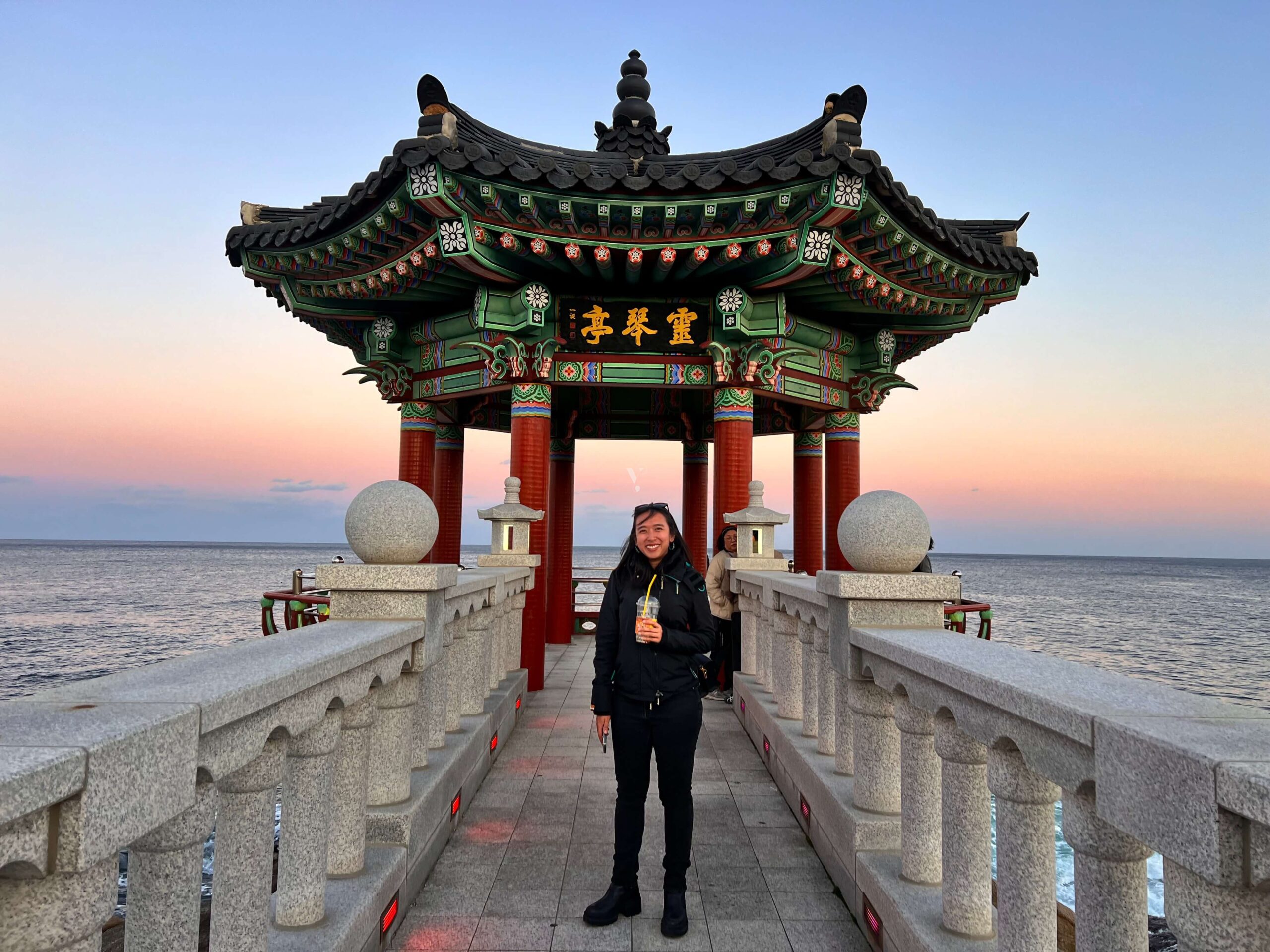
4. Watch the Waves at Yeonggeumjeong Pavilion
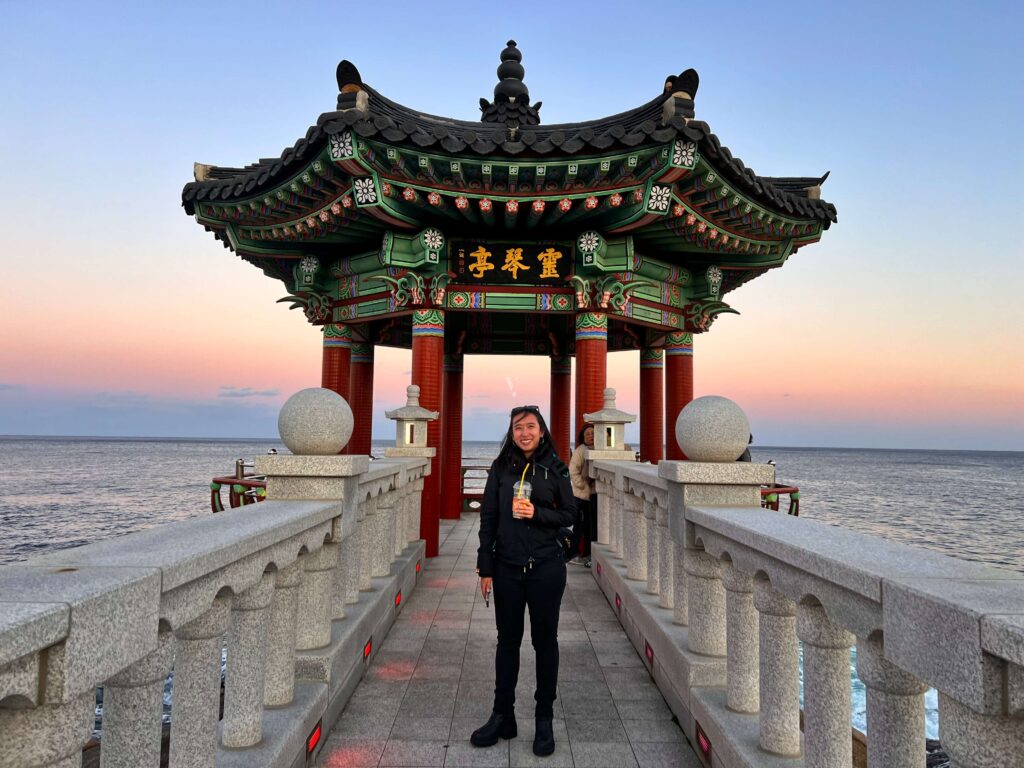
Located right on the rocky coast, this pavilion offers arguably the best ocean views in the city.
There are actually two pavilions: one on a hilltop and one down on the rocks connected by a bridge.
I fell in love with the view the moment I saw it while I was doing my research on Sokcho. I spent almost an hour enjoying the sunset and the sea breeze. Cold, but definitely worth it!
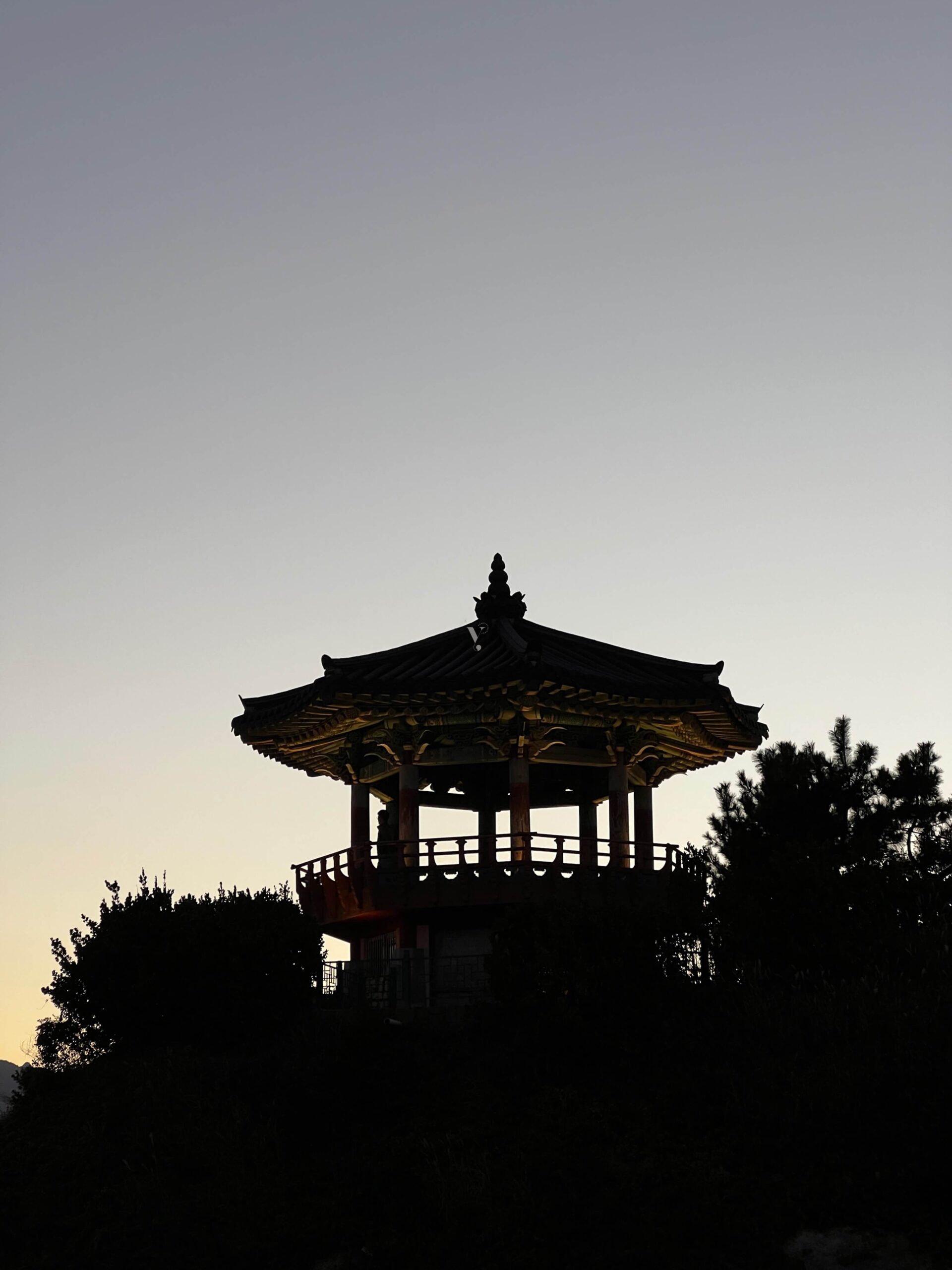
I recommend going at sunrise if you are an early bird, or at night when the bridge is lit up. Hearing the waves crash against the rocks here is incredibly therapeutic.
5. Walk by Sokcho Beach
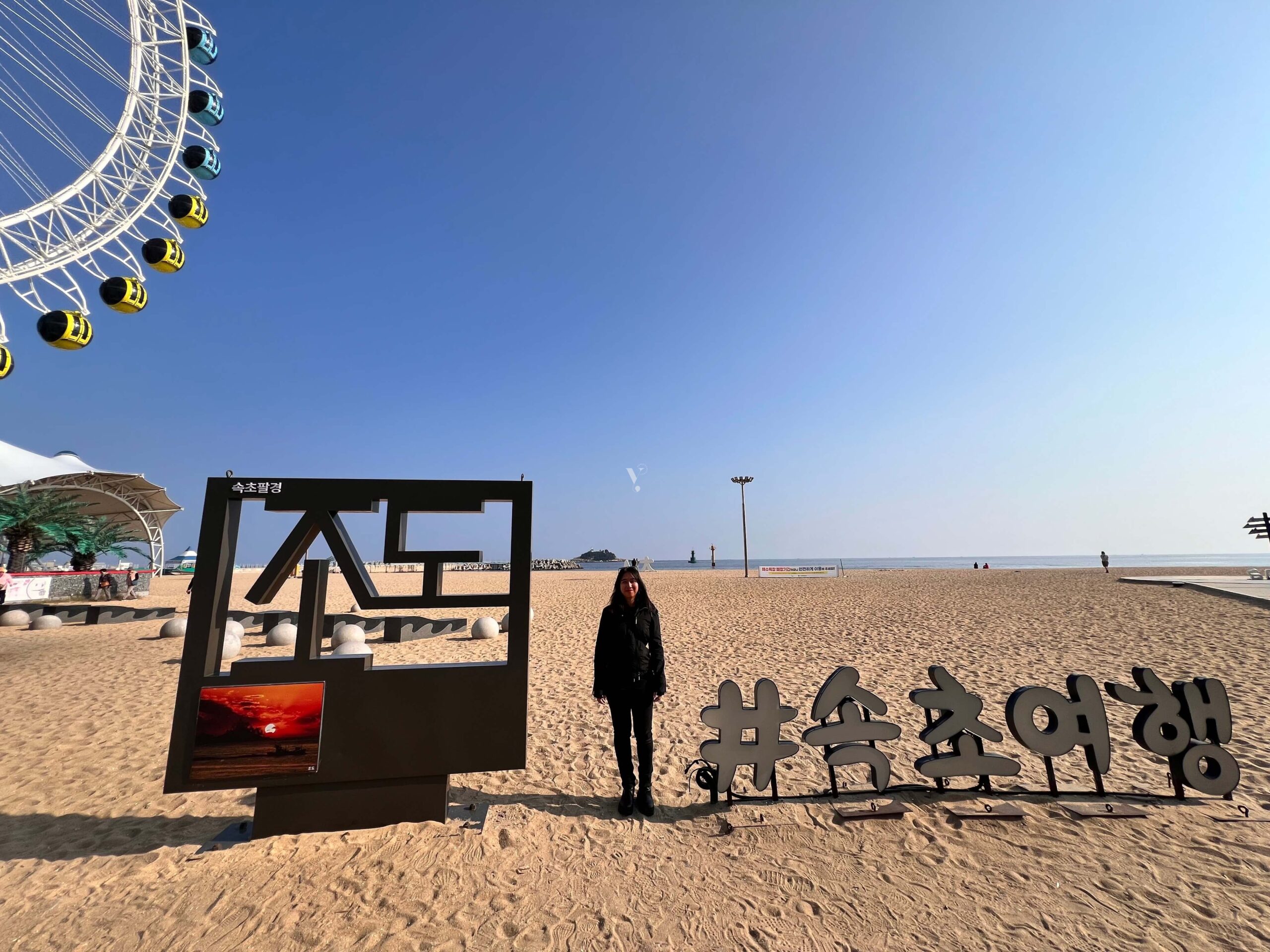
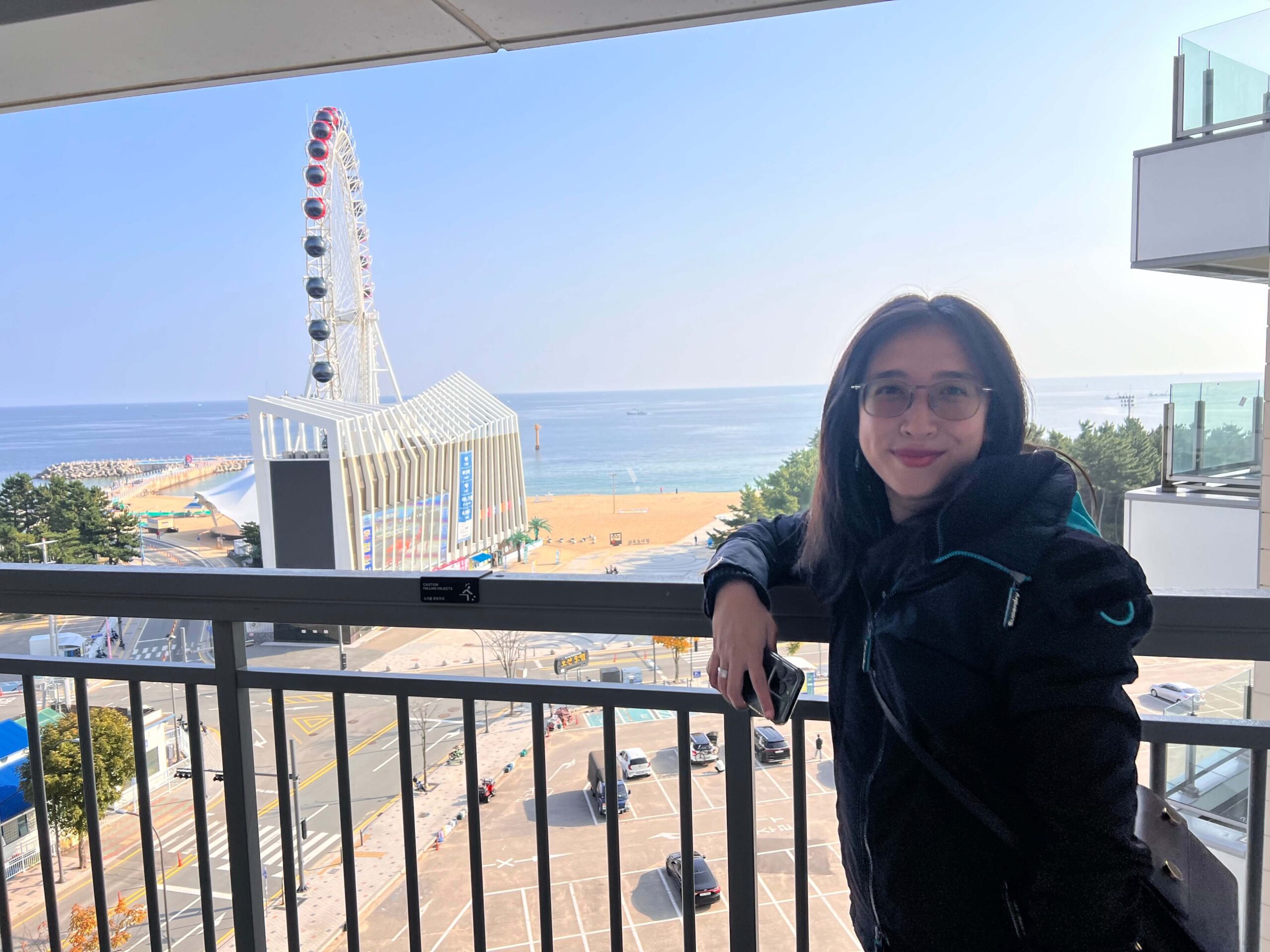
Sokcho Beach is iconic. It’s famous for its clean sand, the blue pine forest behind it, and various photo zones (including the massive “SOKCHO” lettering).
It’s just a short walk from the Express Bus Terminal, making it super accessible. Even in winter, it’s beautiful to just walk along the coastline and watch the deep blue East Sea.
This is the view from where we stayed, within walking distance, and right from our balcony, we have a good view of Sokcho Beach!
6. Eat Sujaebi (Hand-torn Dough Soup)
Gangwon-do province is famous for its potatoes and hearty comfort food. You have to try Sujaebi (hand-torn noodle soup) or Gamja Ongsimi (potato dough balls).
I went to a local spot after hiking Ulsanbawi and had a steaming hot bowl of this chewy, savory goodness of sujaebi.
After my hike up Ulsanbawi, I craved a steaming hot bowl of chewy, savory Sujaebi.
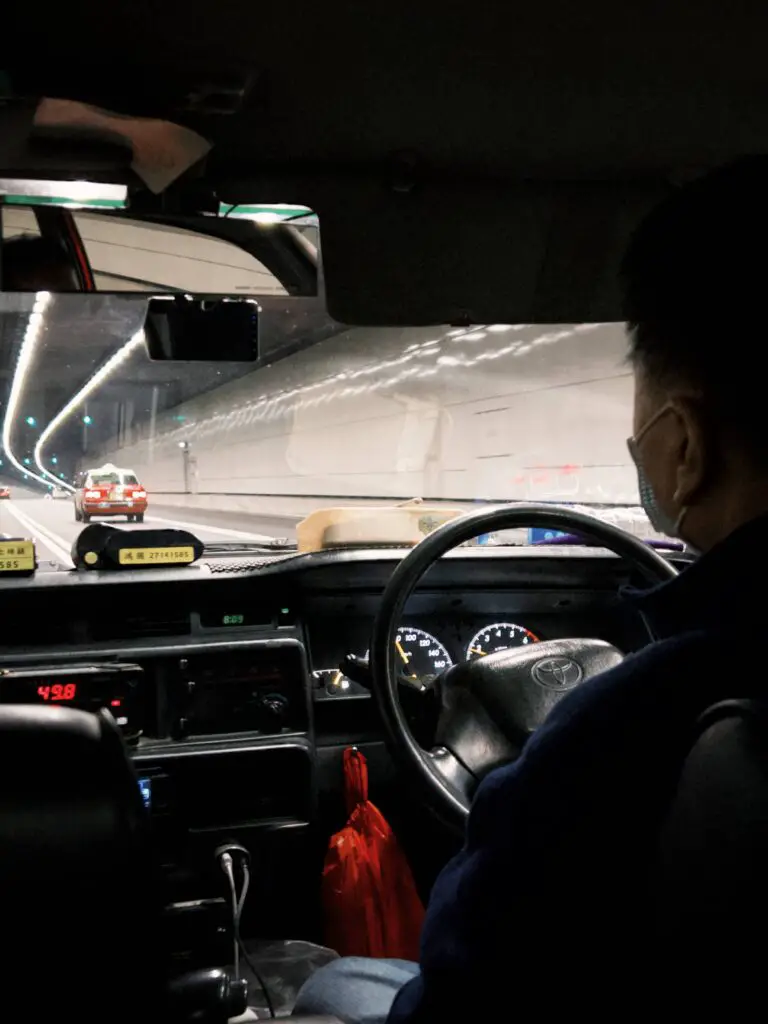
When I told my taxi driver the name of the local restaurant I wanted to visit, he smiled brightly, confirming it was a great choice for authentic local food.
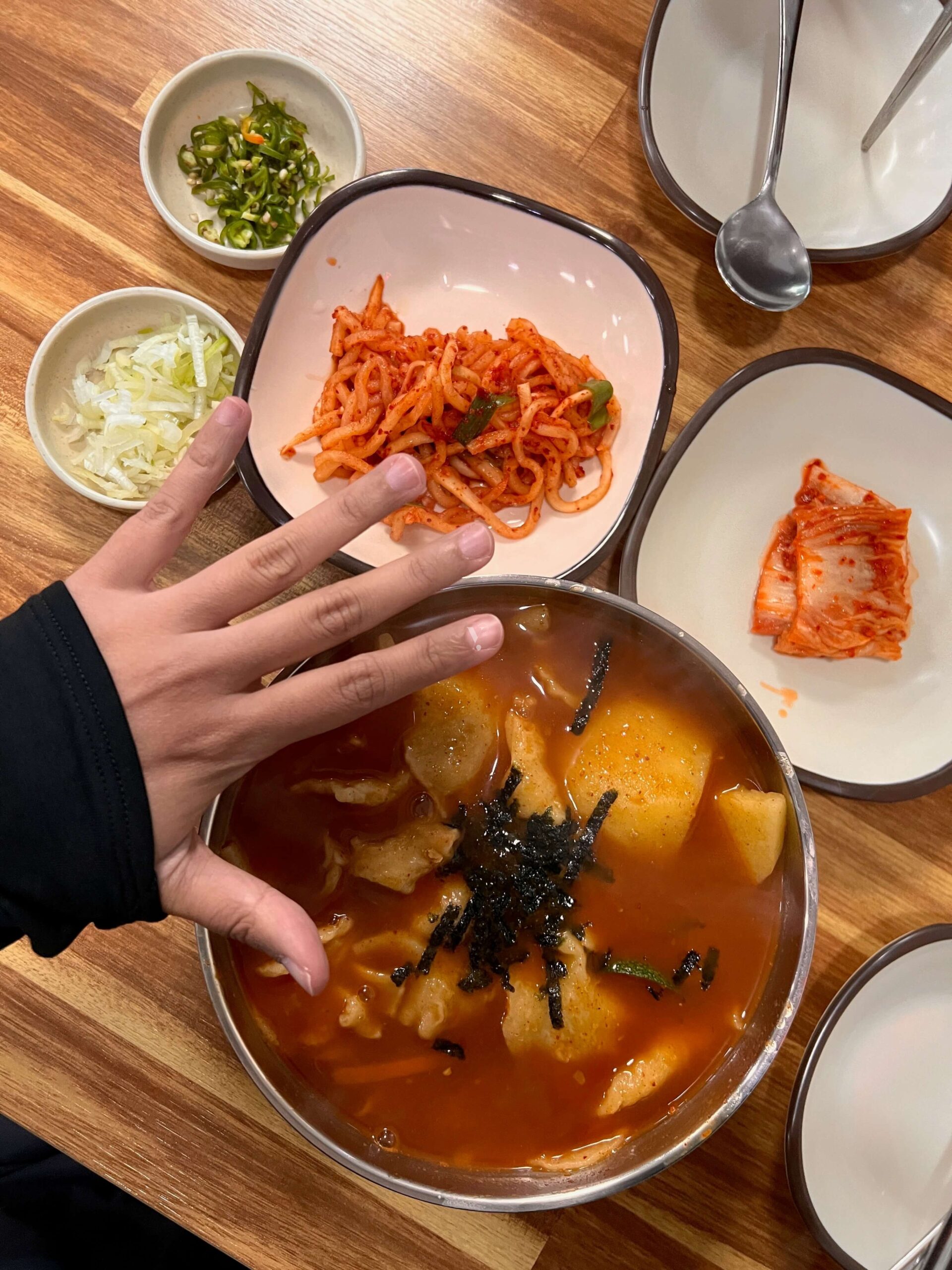
The meal was entirely handmade by a group of local women, from the dough to the rich broth.
Every bite felt filled with warmth and love; the ultimate comfort food after a windy day at the beach or a long hike.
7. Try Snow Crab (Daegae) at a Local Restaurant
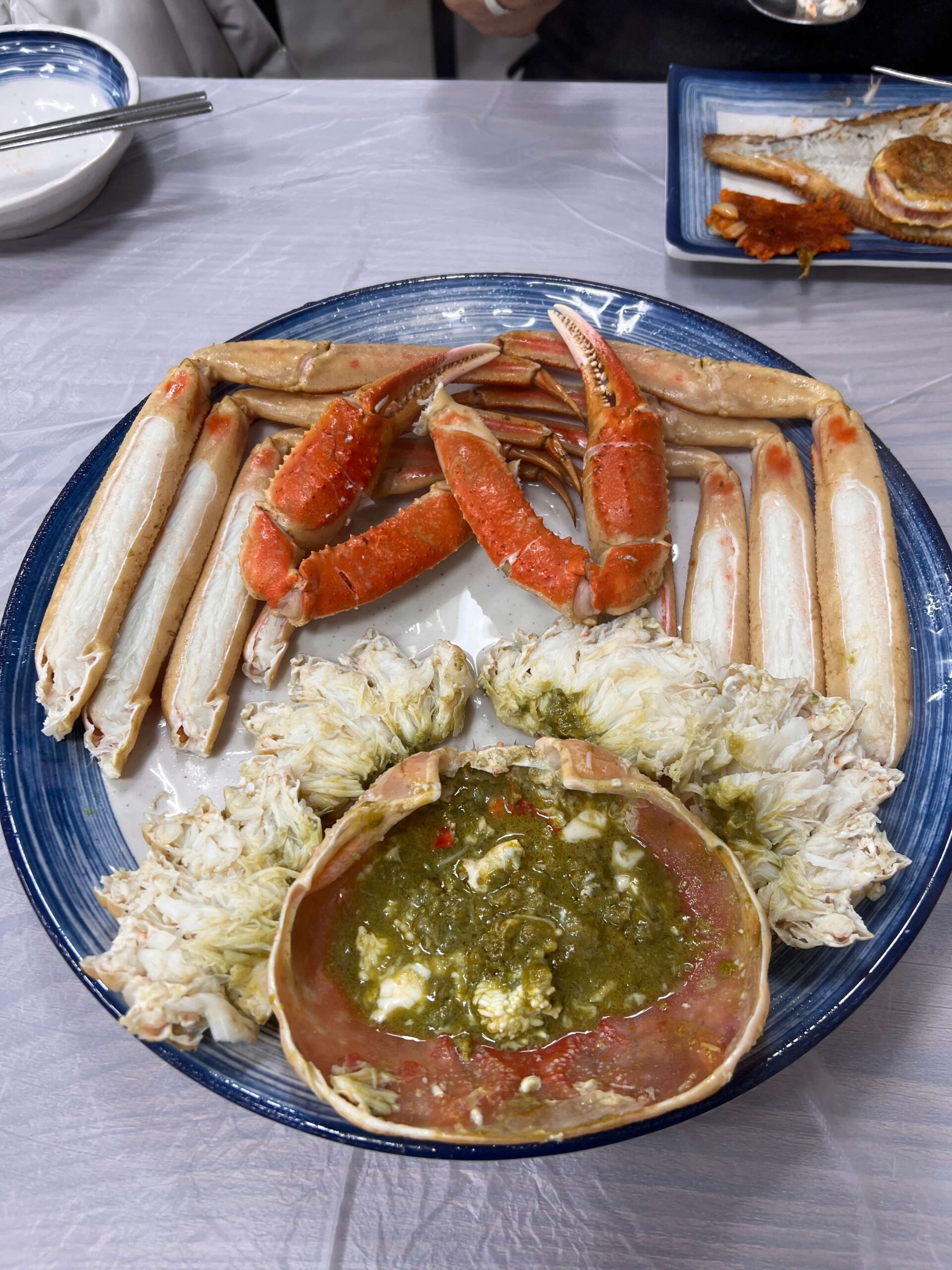
If you are in a port city, eating seafood is non-negotiable! Sokcho is renowned for its Red Snow Crab.
As you walk near the port (especially on your way to Yeonggeumjeong Pavilion), you will see tanks full of these long-legged crabs outside almost every restaurant.
They steam them fresh to order. While it is pricier than street food, the sweet, tender meat is absolutely worth the splurge.
Don’t skip this: At the end of your meal, ask them to mix rice into the crab shell (Gye-ttakji-bap). The restaurant owner prepared it for us, and it was easily the best part of the meal!
8. Take the Gangwon Taxi Tour
If you are short on time or just don’t want to navigate the local bus system, this program is a lifesaver.
The Foreigner Tourist Taxi is a government-subsidized program where you can hire a taxi for 3 hours at a flat, highly affordable rate (the base fare is typically around 20,000 KRW).
How to book: There is a tourism booth right in front of the Sokcho Express Bus Terminal where you can make arrangements, though booking in advance online is highly recommended.
The driver will take you to all the main spots (the market, the beach, the pavilion).
It’s the most efficient way to zip around the city, especially if you are doing a day trip and have a bus to catch later. So, book your Gangwon Foreigner Taxi Tour here.
FAQs About Sokcho
1. How many days do you need in Sokcho?
I think 2 to 3 days is the ideal time for a trip to Sokcho. It gives you one full day for hiking Seoraksan and another full day to explore the market, Abai Village, and the beach.
If you are just doing the city (no hiking), a day trip from Seoul is possible but rushed — here’s my full day-trip itinerary and bus guide if you want to try it anyway.
2. What is Sokcho famous for?
Sokcho is most famous for Seoraksan National Park, Dakgangjeong (sweet fried chicken), Abai Sundae (squid sausage), and its vibrant port culture.
3. What is the best time to visit Sokcho?
Autumn (October) is hands down the best time because of the fall foliage in Seoraksan. I went during autumn, and the view was lovely!
However, Summer is great for the beaches, and Winter has a quiet, snowy charm (and the snow crab tastes better!).
4. Is there food at Seoraksan National Park?
Yes! There are restaurants and cafes near the park entrance (Sinheungsa area) serving Pajeon (pancake), Bibimbap, and Makgeolli.
It’s slightly pricier than in the city, but eating a scallion pancake after a hike is a Korean tradition you shouldn’t miss.
Decided to stay a couple of nights? Check availability at Urban Stay – the beachfront spot we stayed at, walking distance to everything on this list.
Ready to explore Sokcho?
Sokcho was the surprise highlight of my Korea trip. It felt like a breath of fresh air after the hustle of Seoul. I’d definitely come here again for a peaceful feeling and the nature trails.
Whether you are scaling the peaks of Ulsanbawi or just peeling crab legs by the harbor, there is a slow charm here that pulls you in.
If you are planning a trip to South Korea, definitely carve out time for this coastal gem, or check out my two-week South Korea itinerary for some ideas 🙂